fbpx

The Power of Religion in Zimbabwe and How It Can Help Women who Menstruate

For a Zimbabwean woman being a member of a church group is as normal as having a family. The predominant religions are Protestant Christianity and Roman Catholic with 84.1% of the population following a denomination of Christianity. The African Independent Apostolic Church has over 1 million followers and is an interesting blend of local tradition with Christianity. Most of the members are women and whilst there is an inequality within the church that allows only for men to be leaders, the role of women in the church goes largely unchallenged. Wearing white is compulsory during church services to show purity, light and cleanliness. Polygamy and polygamous marriage is acceptable. There is an emphasis on healing within the church and, until recently, modern medicine has been mostly rejected. Virginity testing does still happen, and girls may be married off to older men with multiple wives.

According to Jules-Rosette (1987) women in the church are the bearers of the church’s belief system, even though they are not allowed to be church leaders and in fact the church’s belief system is what represses them.

The point of writing this is not to judge the Apostolic Church for its belief systems but rather to highlight the power of its voice and to understand the importance of religion in Zimbabwe and indeed, worldwide. The voice of religion speaks louder and to more people than any other. Men and women listen to and respond to church leaders.

If we are to create change in the field of menstrual health then what better way than to call upon the leaders of the Churches to acknowledge the importance of menstrual health on education, equality, good health and the environment. To support its members in achieving education and understanding around menstrual health and to help provide safe, sustainable product, such as the Viva Lily menstrual cup, that promote well being, confidence, freedom and happiness.

HELENSVALE SQUATTER CAMP: Part 2

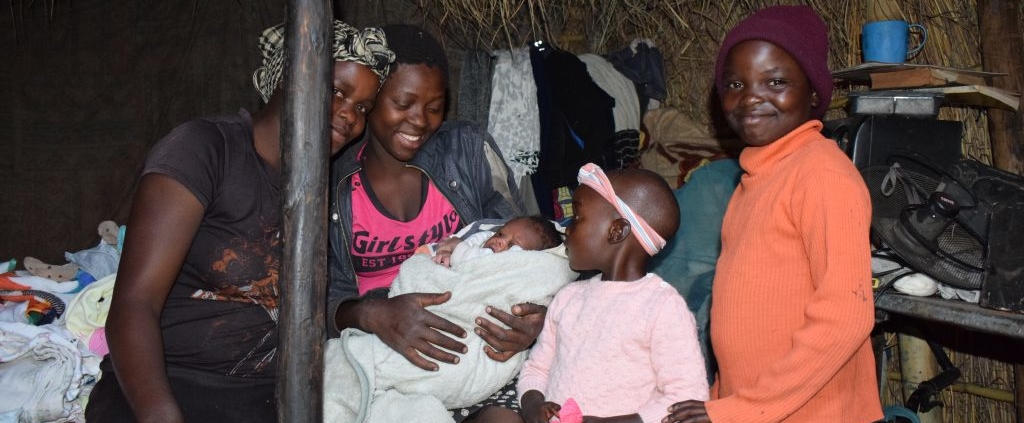
(Pictured above: Tapiwa, her 2 daughters, Gamuchirai and her new baby)
This is the second part to our first Helensvale squatter camp blog, you can read Part 1. here.

Last week I went back to Helensvale Squatter Camp to deliver donations of clothes and nappies people had dropped off for Gamuchirai and Elenia.

Tapioca’s daughter, No Matter

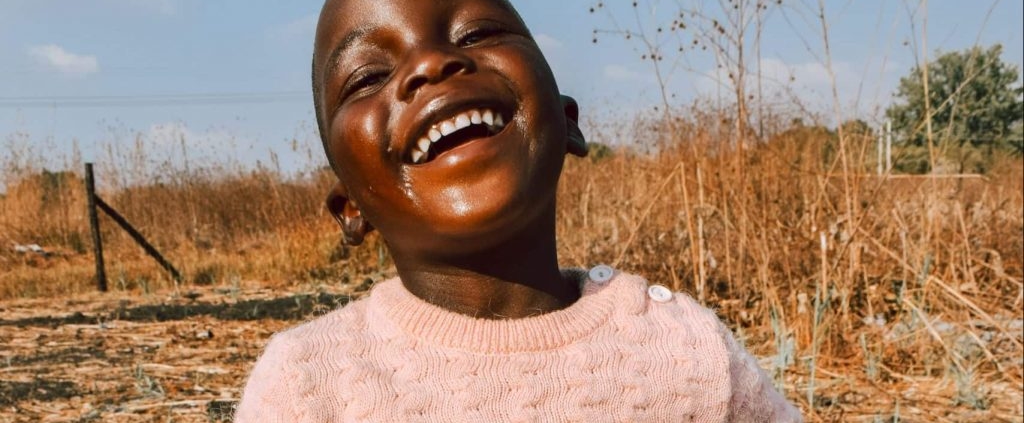
I was greeted by Tapiwa and her daughter, “No Matter”, wearing the pink jersey. Having lived in Zimbabwe for many years, I really shouldn’t be surprised by some of the names people are given but I was curious enough to ask Tapiwa  why her daughter is called “No Matter”.  She gave me the biggest smile, laughed and said “ “Because I live in a squatter camp and I have nothing but…No Matter!” 

Elenia has gone to Mutare as her mother passed away. I don’t know when she will be back but Gamuchirai had her baby four days ago. A little boy, yet to be named and with a very uncertain future ahead of him. I asked where she had given birth. It seems that once the community knew she was in labour they helped her get to the nearest clinic where they had to leave her on the doorstep in the hope that she would be taken in. When I saw her she was beaming with joy at the safe delivery of her baby and obviously delighted with the clothes. But she has a serious reproductive health issue that she will need to address sooner rather than later. I put her in contact with a respected gynaecologist who promised to support her if she goes to Harare Hospital. However, it is a well known fact that people are scared to go to the Government hospitals where the care is limited by lack of funding for essential medicines and nursing staff wages are pitiful so I don’t know if she will go.

Gamuchirai with her son
Tendai who is so happy using the cup

As we walked back through the Vlei to my car we were intercepted by Tendai who had been at the Viva Lily training. She told me “she is so happy because she is using the Viva Lily cup and it is very smart.” She said she was using it right there and then and is very happy with it. She said, “It has changed my life.” 

Thank you to all the people who bought Pippa Cooks Biscuits and contributed to helping this community. For more info on how you can buy the most delicious biscuits and donate a Viva Lily menstrual cup please contact Pippa on info@pippacooks.co.uk or see her amazing photos and order through Instagram @pippacooks

VIVA LILY PARTNERS WITH YADT; HELPING UNDERAGE SEXUALLY ACTIVE GIRLS IN CHITUNGWIZA, ZIMBABWE

 Chitingweza thrives on informal trading and as can be seen here, much of it done on the sides of the road.

“Research has shown that 50% of girls aged thirteen and fourteen are sexually active in Chitungwiza, a suburb of Harare. With the family unit broken down, many young girls and boys are left largely unattended.” This, according to Wesley from YADT (Youth Aspire Development Trust) has had a direct effect on the lifestyle this generation of young people are now living. Sex, drugs and pornography are cheap and readily available.

Driven by peer pressure, social media and easy access to pornography through Whatsapp films, the young today are engaging in “Marathon Sex Parties”. These parties happen when parents are away, drugs, alcohol and a group of adolescent boys and girls get together at a house, lock the gate and “party” for as long as they can. Sex enhancer drugs, multiple partners and often no contraceptives are the norm.

Some of the family planning methods include washing the vagina out with Surf washing powder, pouring Fanta orange into the vagina or eating a seed of marijuana.  Abortion pills are readily available on the black market.

Wesley explained that in the 90’s drug abuse was mainly seen with the boys but today more girls are doing drugs than ever before, including ecstasy and bronco dilators.  He attributes much of the new behavior to the mixing of cultures through an increase in travel as well as the internet. 

There are the inevitable hot spots such as around the beer halls which are often packed with older men and younger girls. The girls are willing to sell themselves for a dollar in order to buy food, sanitary products or to go to school. There is one area where girls as young as ten are living as “dancers” with a “Big Mama” overseeing them. Many are orphans and all are just trying to survive. Sometimes the parents are simply unaware of what their daughters are doing and we were told that the girls are often the aggressors.

Of course this isn’t limited to the townships. Pool parties, experimental behavior, drinking, drug taking and a need to mimic what is seen on social media, in music videos, TV programs and other internet based forums is as prolific in the “leafy” suburbs.

Wesley, head of YADT


Some of the women the Viva Lily team educated about using a Viva Lily menstrual cup

Today children are bringing themselves up, in part through parent absenteeism but also because of their knowledge of the internet, smart phones and computers that allows them to hide much of their online activity. We simply don’t know what they are watching or who they are engaging with. 

As Wesley so eloquently put it; “Sometimes children have been made more vulnerable by the very rights we give them of freedom and privacy. Children have access to the internet but no guidelines or education. We give them more freedom and more privacy with no accountability. Where there are rights there also needs to be responsibility.”

And this is where YADT comes in. Having identified that young people, especially girls, are not getting the much needed sexual reproductive health education, Wesley started YADT in 2015 to address these issues. His dynamic team are dedicated to reaching as many girls as possible. He engages with Church leaders and organizations such as PSZIM to provide free family planning and condom distribution on a monthly basis. 

Wesley understands that, like most young girls, the girls here are not comfortable to discuss SRH (sexual reproductive health) or seek assistance with their elders present. The Amplify Change Project which he runs, is designed to increase communication between parents and children. 

Happy women with their own Viva Lily Cups holding up signs saying “MENSTRUAL HEALTH MATTERS”

So how does all this tie in to menstrual health and Viva Lily menstrual cups? Well, the simple fact is that girls need menstrual products and a discussion on menstrual health is not nearly as controversial as a discussion on SRH. Girls are very happy to learn about menstrual health and delighted to be given a long term solution to their monthly period. At the same time, it leaves them available to discuss other SRH issues and creates a forum of trust. As we have seen in many projects, discussing menstrual health and distributing Viva Lily cups, creates a unique opportunity for engaging in other subjects such as family planning and for identifying girls that are particularly vulnerable and may need further support.

The girls pictured here have all been identified as being particularly vulnerable and have been brought into the YADT program in the hope that with extra guidance and support they will be able to make better decisions and have a positive, bright future. We are delighted to be able to announce our partnership YADT and look forward to helping more and more girls in Zimbabwe through their amazing program.

As can be seen here, clothes have to be dried in full view of passerby, making drying menstrual products like rags and reusable pads impossible

“MY VOICE, OUR EQUAL FUTURE” CELEBRATING INTERNATIONAL DAY OF THE GIRL CHILD

International Day of the Girl Child exists to recognise the rights of girls worldwide and to promote the empowerment of girls everywhere. It came about through the The Beijing Declaration and Platform for Action which stands as the most progressive blueprint ever for advancing the rights of not only women but girls, too. Now, nearly 25 years later, the Platform for Action remains a powerful foundation for assessing progress on gender equality. It calls for a world where every girl and woman can realize all her rights, such as to live free from violence, to attend and complete school, to choose when and whom she marries, and to earn equal pay for equal work. 

The Platform for Action specifically calls on the global community to

  1. Eliminate all forms of discrimination against girls.  
  2. Eliminate negative cultural attitudes and practices against girls.  
  3. Promote and protect the rights of girls and increase awareness of their needs and potential.  
  4. Eliminate discrimination against girls in education, skills development and training.  
  5. Eliminate discrimination against girls in health and nutrition.  
  6. Eliminate the economic exploitation of child labour and protect young girls at work.  
  7. Eradicate violence against girls.  
  8. Promote girls’ awareness of and participation in social, economic and political life.  
  9. Strengthen the role of the family in improving the status of girls.  

“My Voice, Our Equal Future”

To celebrate International Day of the Girl 2020 we took a series of Viva Lily films showing how women in Zimbabwe make tampons from cow dung, maize cobs or paper. 

Providing safe, affordable, environmentally friendly Viva Lily menstrual cups means our girls can be confident of good menstrual health, of staying in school, of participating fully and equally in class and on the sports field.  With your help our girls will enjoy a future free from fear, stigmatisation and inequality. Nobuhle Shumba demonstrates in this video how cow dung is dried and wrapped in scrap material in order to be used as a tampon.https://player.vimeo.com/video/467363710?dnt=1&app_id=122963

Cultural taboos around inserting a product simply don’t exist when there is nothing else to use but a maize cob. Out in rural Zimbabwe we were able to discuss this with elders from the area who were delighted that their young girls would not have to suffer as they have with irritations, rashes and long term reproductive health issues. Watch our film where Nobuhle shows how a maize cob is used as a makeshift tampon. https://player.vimeo.com/video/467391666?dnt=1&app_id=122963

Planning for your period doesn’t exist when living below the international poverty line. So what do you do when you start your period as you walk to school or whilst you’re in the classroom? Here we show you how girls take a piece of paper, often found on the side of the road or in the rubbish, to make a tampon. Many of our girls don’t have underwear and many of the schools don’t have adequate toilet facilities so getting your period is often a traumatic, frightening event that you cannot control.https://player.vimeo.com/video/467396503?dnt=1&app_id=122963

You can help this cause directly by donating to our 1 Million Cups Campaign and help a girl in Zimbabwe period with comfort and confidence for the next 10 years. Every Cup Counts.

FREE DELIVERY ON ALL PURCHASES